
Ages 12–13
Identify, observe, measure and describe. Build a useful vocabulary through familiar materials, photographs and simple drawings.
Our curriculum
Environmental understanding develops by degrees: from noticing what happens to explaining what the evidence allows us to conclude.
The selected development model comprises four module packages for each of four age groups. Every package brings together student material, lesson plans, activities, teacher guidance and assessment.
The curriculum supports languages, mathematics, biology, chemistry, physics, geography and social studies. Local educators will match the material to the actual syllabus, teaching language and available lesson time.
It begins with environmental literacy: learning to distinguish waste from pollution, weather from climate, hazard from risk, and a claim from the evidence offered for it.
Identify, observe, measure and describe. Build a useful vocabulary through familiar materials, photographs and simple drawings.
Explain relationships and compare measurements. Move from observation towards labelled drawings and introductory diagrams.
Analyse evidence, balances and uncertainty. Work with graphs, processes and structured comparisons.
Bring an enquiry together through a project, assessment and a presentation grounded in evidence.
Each module contains four lessons of 45–60 minutes. Four modules therefore provide 12–16 teaching hours for a learner following one age-group programme.
The complete portfolio holds 48–64 hours of teaching content across all four age groups. That total is a programme production measure.
Fields of enquiry
These four fields describe the proposed teaching direction. Final module titles and lesson content will be settled through authorship, scientific scrutiny and educational review.
How do we recognise a useful question? What separates an observation from an explanation? Learners develop the vocabulary to compare sources, read a measurement and describe uncertainty.
A classroom starting point: compare two accounts of the same environmental claim and identify what each source actually establishes.
Follow familiar materials through use, reuse, repair, recycling, treatment and disposal. Examine why different materials need different decisions, and how a system’s boundary changes a comparison.
A classroom starting point: trace the possible next uses of a clean, familiar object, recording what must happen at each step.
Explore the connections between a source, an emission, transport through the environment and possible exposure. Understand why a release measurement alone cannot describe every consequence.
A classroom starting point: use published information to build a simple source-to-receptor pathway, identifying the evidence available at each step.
Connect weather and climate, snow and glaciers, changing water storage and the lives of downstream communities. Distinguish long-term change from the mechanism of a particular disaster.
A classroom starting point: explain the difference between seasonal snowmelt, a glacial lake outburst and a flood associated with a rock-and-ice avalanche.
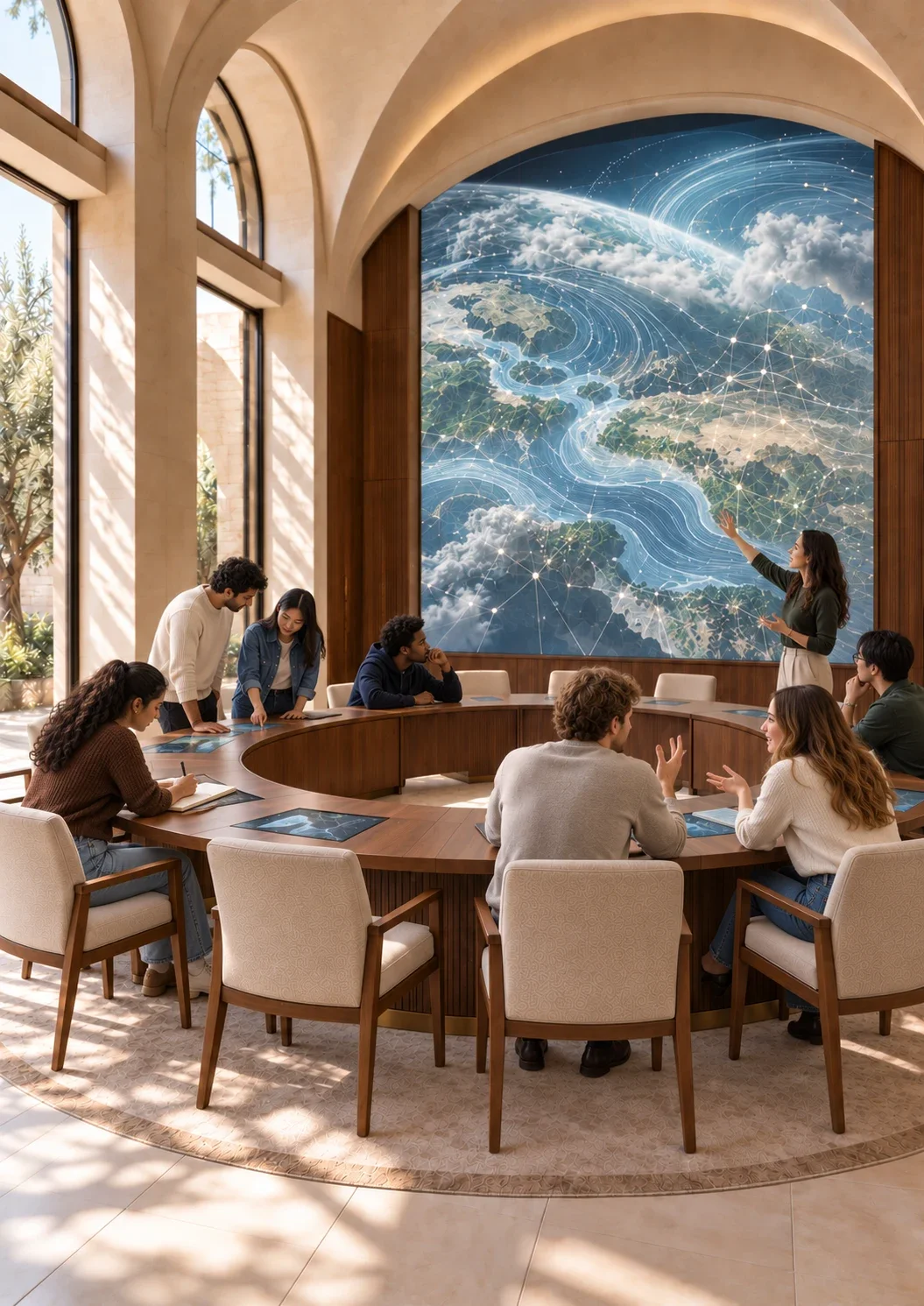
Shared science, local meaning
A translated textbook cannot, by itself, explain the environmental conditions around a particular school. Each participating setting needs a local evidence question, dated sources, suitable teaching and an honest account of what remains unknown.
English is the planned shared master. The First Wave provision includes twelve further human-translated editions: French, Portuguese, Arabic, Dari, Pashto, Bengali, Khmer, Burmese, Urdu, Somali, Malagasy and Hindi. Actual school languages and any further needs require local agreement.
The educator’s part in the programmeBaseline and follow-up work should test whether learners can observe, interpret measurements, use evidence and explain uncertainty. Attendance is useful information; understanding is the educational question.
Learning activities will use safe observation, existing information and clean demonstration materials. Environmental questions belong in education; hazardous-site investigations and the handling of dangerous waste do not belong in children’s classroom tasks.