
A foundation for enquiry.
A proposed progression from careful observation to the ability to compare evidence and explain a conclusion.
Explore our approach
Understanding Before Anything Else.
OUR FOUNDING CONVICTION
“The Academy welcomes those who seek not merely to acquire knowledge, but to contribute to understanding.”
A proposed progression from careful observation to the ability to compare evidence and explain a conclusion.
Explore our approachAcademy essays and selected research, brought together for readers who like to know where an explanation comes from.
Enter the LibraryA concept for safe, practical enquiry: observe a system, examine a pattern and find out what the evidence can support.
Step into the LabFor enquiring minds, thoughtful educators and a generation with rather important questions to ask.
We are developing an environmental education programme that begins with curiosity, follows the evidence and makes room for independent judgement.
Learning to see the connections
A question about water can belong to chemistry, geography, mathematics and the life of a community all at once. The planned curriculum gives teachers a common foundation, with local evidence and language shaping its use.
How the learning develops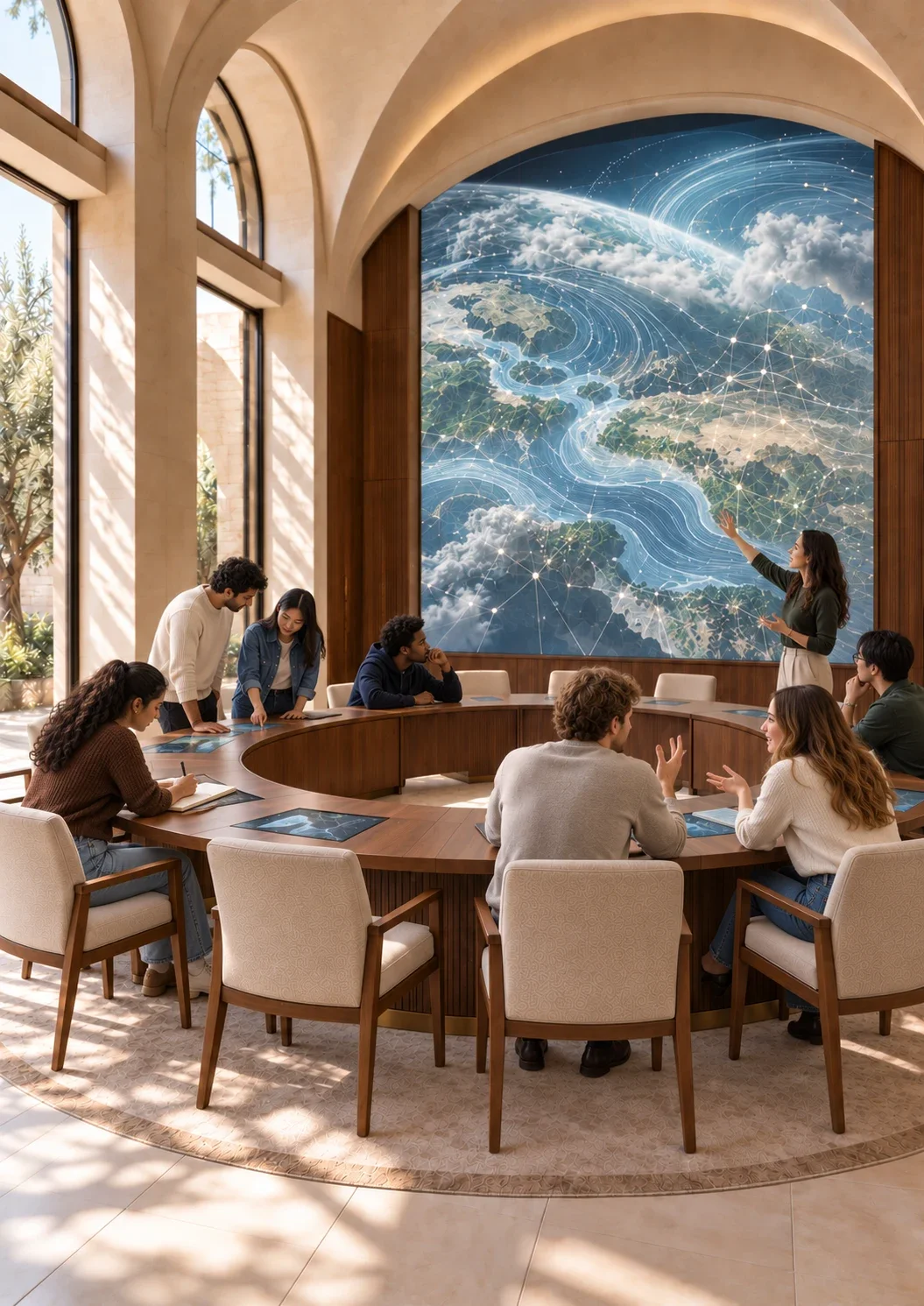
A little curiosity. A great deal of care.
A learner may remember a definition. We hope they will also learn to ask why it matters, how it was established and whether it applies to the question in front of them.
That calls for sound science, thoughtful teaching and the confidence to say, occasionally, “We do not yet know.”
For educators & partnersTwo beginnings
Ghana and Nepal are the two pilot directions: one centred on educational delivery in an African setting; the other on the scientific questions of the Hindu Kush Himalaya. Each begins with its own people, evidence and responsibilities.
The founding education pilot: working towards locally relevant teaching, educator support and a careful assessment of what learners understand.
Explore GhanaA scientific and educational flagship connecting snow, ice, water, hazards and the communities who depend on these systems.
Explore NepalThe First Wave
The UNICEF-informed planning selection brings educational need into focus. The next task is to understand each place well enough to build a useful programme with it.
See all 25 territoriesCurrent Affairs
The world rarely arranges itself into neat school subjects. We connect environmental questions with science, mathematics, geography and language — and with the places learners call home.
Explore the LibraryChildren inherit environmental systems they did not design. Giving them the ability to understand those systems is not about recruiting them to a cause. It is about giving them the knowledge needed to recognise evidence, ask better questions and make more informed decisions later.
Read the essayPollution, climate change and waste are connected environmental issues, but they are not the same thing. Children can understand the distinction when each problem is explained through its own cause and pathway.
Read the essayMountain snow and glaciers store water and influence river systems. As the climate warms, changing snow and ice can affect when water becomes available, creating consequences far beyond the mountains themselves.
Read the essayAn invitation
We welcome the contribution of educators, scientists, researchers and institutions who share a commitment to careful explanation and independent thought.
Explore a partnership